
CS2 Skins and Political Identity Shows Relevance in Political Science No One Expects

Politics

At first glance, monesy CS2 skins, the game as a whole and the academic field of political science may seem entirely unrelated. One exists in competitive gaming culture, while the other examines governments, institutions, and the behavior of societies. Yet both revolve around one deeply connected idea, identity and the ways individuals express affiliation within larger systems.

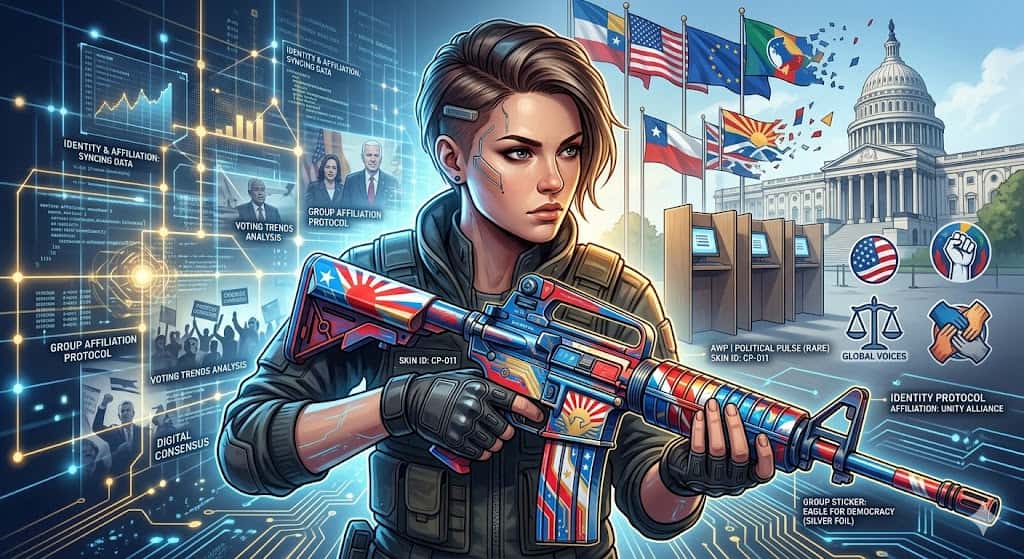
In competitive gaming, players customize weapons using skins not simply for aesthetics, but often to communicate status, preferences, and belonging within specific communities. Political science examines similar patterns in society, where individuals signal beliefs, loyalties, and group identity through symbols, behavior, and participation. By comparing these two seemingly separate worlds, we can better understand how identity functions in both digital and political environments.

Digital Customization as a Form of Identity Expression

One of the defining features of Counter-Strike 2 is its extensive weapon skin system. Players can acquire, trade, and display skins that visually customize their in-game equipment. While skins do not directly improve gameplay mechanics, they carry social value within the gaming ecosystem. Players often choose skins based on:

  • Personal aesthetic preferences
  • Rarity and perceived status
  • Community trends and popularity
  • Association with professional players or teams

This behavior mirrors a central concept in political science, identity signaling. In political systems, individuals use visible markers such as clothing, slogans, flags, or affiliations to communicate who they are and what groups they belong to.

Group Affiliation and Community Membership

Political science places significant emphasis on group formation and collective identity. People naturally organize themselves into communities based on shared beliefs, cultural values, or political preferences. These affiliations shape behavior and influence how individuals interact with institutions and society.

Gaming communities function in surprisingly similar ways. Within the Counter-Strike 2 ecosystem, players often identify with specific groups based on shared interests with some common examples include:

  • Competitive esports communities
  • Skin trading communities
  • Casual gameplay groups
  • Fans of professional teams and tournaments

The skins players use can reinforce membership within these groups.

Believe it or not, there are some skins associated with status, participation, or experience that greatly enhances the whole gameplay.

In political systems, party membership or ideological alignment creates similar social boundaries. Symbols help individuals identify who belongs to the same group, strengthening internal cohesion.

Status Signaling and Social Hierarchy

Another important connection between CS2 skins and political science is the concept of status signaling. Political systems often contain visible markers of authority, influence, and hierarchy. Positions of leadership, institutional roles, and symbolic power all communicate status within society.

Digital economies in gaming replicate this structure. Rare or expensive skins in Counter-Strike 2 function as social indicators. Players who own high-value items may be perceived differently by others, regardless of their actual gameplay ability. This creates a hierarchy based on digital ownership. Political science studies similar dynamics through concepts such as:

  • Social stratification
  • Elite theory
  • Symbolic power structures
  • Resource inequality

In both environments, ownership of valuable assets influences perception and can create distinctions between different social groups.

The Economics of Digital Identity Systems
Political science also examines how economic systems influence identity and power. Wealth distribution often determines access to resources, opportunities, and social influence. Interestingly, digital gaming economies reflect comparable structures.

The CS2 skin marketplace allows players to buy, sell, and trade cosmetic assets, creating a functioning digital economy driven by scarcity and demand. Certain skins increase dramatically in value based on rarity, community demand, or historical significance. This system introduces economic behaviors similar to real-world markets:

  • Speculation and asset valuation
  • Consumer demand patterns
  • Wealth concentration through ownership
  • Market-driven status competition

From a political science perspective, this demonstrates how economic systems shape identity expression. Those who have the key to digital assets typically have higher positions within the gaming community, similar to how wealth can impact social standing in economic and political systems.

Digital Spaces as Modern Social Laboratories

Perhaps the most fascinating connection between CS2 skins and political science is that online games increasingly function as social laboratories. Political scientists study how individuals behave within systems of rules, incentives, and group dynamics. Multiplayer games provide highly structured digital environments where these same patterns emerge naturally.

In Counter-Strike 2, players navigate competitive systems, economic exchanges, social hierarchies, and identity-based communities. As digital spaces continue to evolve, researchers increasingly recognize that online communities reveal valuable insights about human organization, cooperation, and identity formation.

Surprising Relevance of CS2 and Politics

Although Counter-Strike 2 skins and political science appear unrelated on the surface, both revolve around how individuals express identity within larger systems.

Weapon skins function as digital symbols of affiliation, status, and personal preference, much like political symbols communicate ideology, group membership, and social standing in society. Both environments demonstrate how people use visible markers to define themselves and interact with communities around them.

Politics and Entertainment: Exploring the Intersection with Teleflix

Politics

politics

The Rise of IPTV in Political Discourse

IPTV, or Internet Protocol Television, has swiftly become one of the most significant mediums for accessing entertainment, news, and even political content. With the proliferation of streaming services, the way we consume political information and entertainment has undergone a profound transformation.

Understanding the Landscape

Teleflix, known as one of the best IPTV services, has emerged as a frontrunner in providing diverse content to its users, including a substantial array of political programming. As the lines between politics and entertainment blur, platforms like Teleflix play a pivotal role in shaping public discourse and opinion.

Breaking Down the Boundaries

Traditionally, politics and entertainment occupied separate spheres. However, the advent of IPTV has dissolved these boundaries, ushering in an era where political analysis, satire, and commentary are seamlessly integrated into mainstream entertainment.

The Influence of IPTV on Political Engagement

The accessibility and convenience offered by IPTV platforms like Teleflix have democratized political engagement. Viewers can now access a wide range of political content at their fingertips, from live streams of debates to documentaries on historical events. This accessibility has not only increased awareness but also encouraged greater participation in political discussions.

Moreover, IPTV has proven to be a powerful tool for reaching younger audiences who are traditionally less engaged in politics. By incorporating political content into entertainment formats, platforms like Teleflix can capture the attention of this demographic and spark interest in civic issues.

The Power of Diversity

One of the most significant advantages of IPTV in the realm of politics is its ability to offer diverse perspectives. Teleflix, with its extensive catalog of channels and programs, ensures that viewers have access to viewpoints across the political spectrum, fostering critical thinking and informed discourse.

In contrast to traditional media outlets that may be biased or limited in their coverage, IPTV platforms like Teleflix provide a platform for marginalized voices and underrepresented communities. This diversity enriches the political landscape and empowers viewers to explore a range of viewpoints before forming their opinions.

Navigating Political Content on Teleflix

With the abundance of political content available on Teleflix, users may find it overwhelming to navigate through the myriad of options. However, the platform’s user-friendly interface and personalized recommendations make it easier for viewers to discover content that aligns with their interests and preferences.

Teleflix employs algorithms that analyze user behavior and preferences to suggest relevant political content, ensuring that users are exposed to a diverse range of perspectives while also catering to their individual tastes. Additionally, the platform offers curated playlists and themed channels, making it simple for users to explore specific topics or genres within the realm of politics.

READ ALSO: Politics and News Apps: 3 Best Free News Apps

Conclusion: Embracing the Evolution

In conclusion, the convergence of politics and entertainment on platforms like Teleflix marks a significant evolution in media consumption. As we embrace this shift, it’s essential to recognize the impact of IPTV on political discourse and engage with content in a thoughtful and discerning manner.

By leveraging the accessibility and diversity offered by IPTV platforms, viewers have the opportunity to become more informed and engaged citizens. As political content continues to find its place in mainstream entertainment, platforms like Teleflix will play an increasingly crucial role in shaping the political landscape and empowering viewers to participate in the democratic process.

Connection of Computer Games and Politics

Politics

Computer games are political even if entertainment is often in the foreground. Computer games reflect social values ​​and political ideas. Games such as the best god simulator game take up real conflicts in fictional scenarios. Games address flight and migration and offer the potential to rethink gender clichés and pose ethical questions to players. In addition, they can be social experimentation areas in which concepts of society and new forms of coexistence can be tried out.

Computer games are becoming political

Whether imaginary worlds, every conceivable game, or even a farming simulator, video and computer games are exceptionally diverse in their subjects. There is only one topic that has been largely ignored by the industry: politics. But that is gradually changing.

Games are political – always

Anyone who thinks politics breaks games should never have liked any game. Because even if games are not explicitly political, almost all of them are indirect.

best god simulator game

Every game transports a political message. For example, when the gamer in “Papers, please “, as the controller at a border crossing, decides whether immigrants are allowed to cross the border. The way women appear in games, active protagonists or passive victims, are all political statements.

Even in “Tetris”, the Russian classic game, which ostensibly has no plot or meta-level, there is a lot of political controversy behind the scenes. There were disputes over rights and secret contracts, even political pressure on Gorbachev personally.

Whenever a game is published that works with politically charged images, the discussion breaks out on new ones. Are computer games political? Many developers persistently deny this dimension to their products. This also has to do with the fear of a radical minority.

Games are still a very young medium. This form of culture has so far neither developed the self-image nor the critical apparatus. For example, the cinema has had it for decades, literature, theater, film, and the visual arts even for centuries. Before the computer game is reconciled with the fact that its content is always also political, the audience and the gaming industry still have to mature a little. The recurring discussion about it is the way to get there.